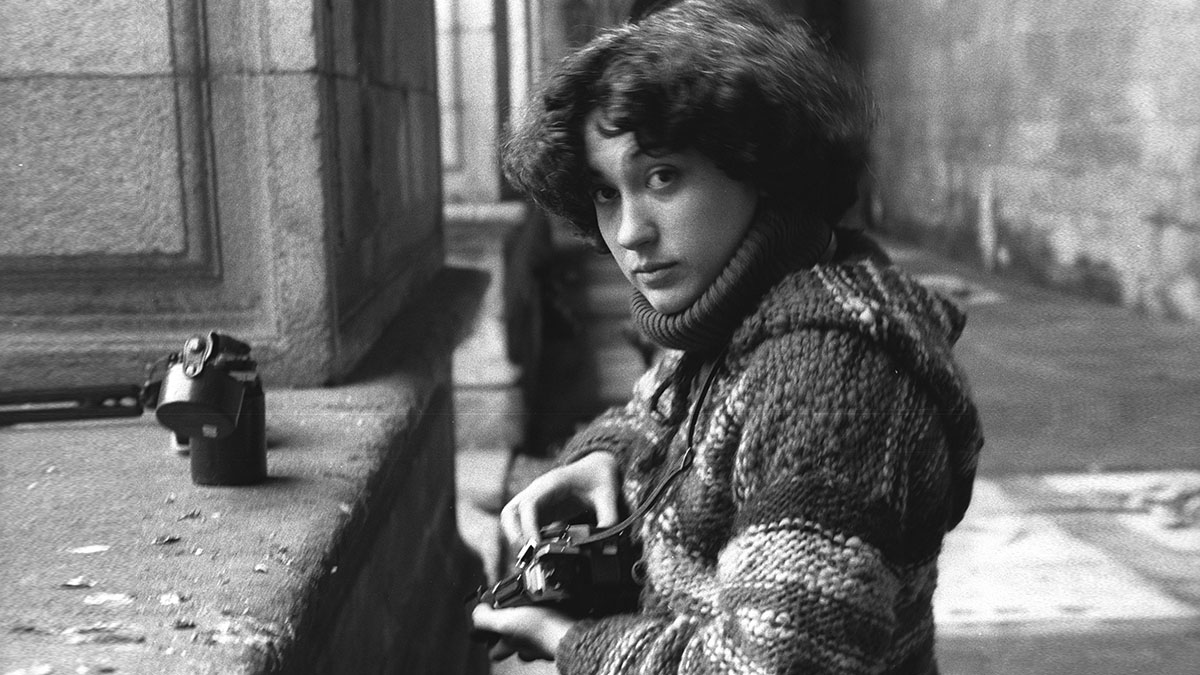
BIOGRAPHY
Anna Turbau (Barcelona, Spain, 1949–2025) was a documentary and social photographer who created one of the most powerful visual accounts of Spain’s Transition to democracy, particularly in Galicia between 1975 and 1979. She studied graphic design at Escola Massana and Elisava, and came to photography through the visual arts, with the idea of using the camera as a tool to confront the reality around her directly.
In the early 1970s she began working in Barcelona, closely connected to the city’s cultural and musical scene. Her first exhibitions, such as “Fotografías de Jazz” (9th Barcelona Jazz Festival, Sala Aixelà, 1974) and “Jazz para cinco instrumentos” (Sala Aixelà and 10th International Jazz Festival, 1975), already reveal the combination of rhythm, proximity, and sensitivity towards people that would remain a constant throughout her work. At the same time, she turned her attention to the working-class neighbourhoods of Barcelona’s historic centre, where her social photography focused on poverty, marginalisation, and urban transformation during the final years of Francoism and the democratic transition in both Catalonia and Galicia.
GALICIA 1975–1979
ARCHIVE OF A TRANSITION
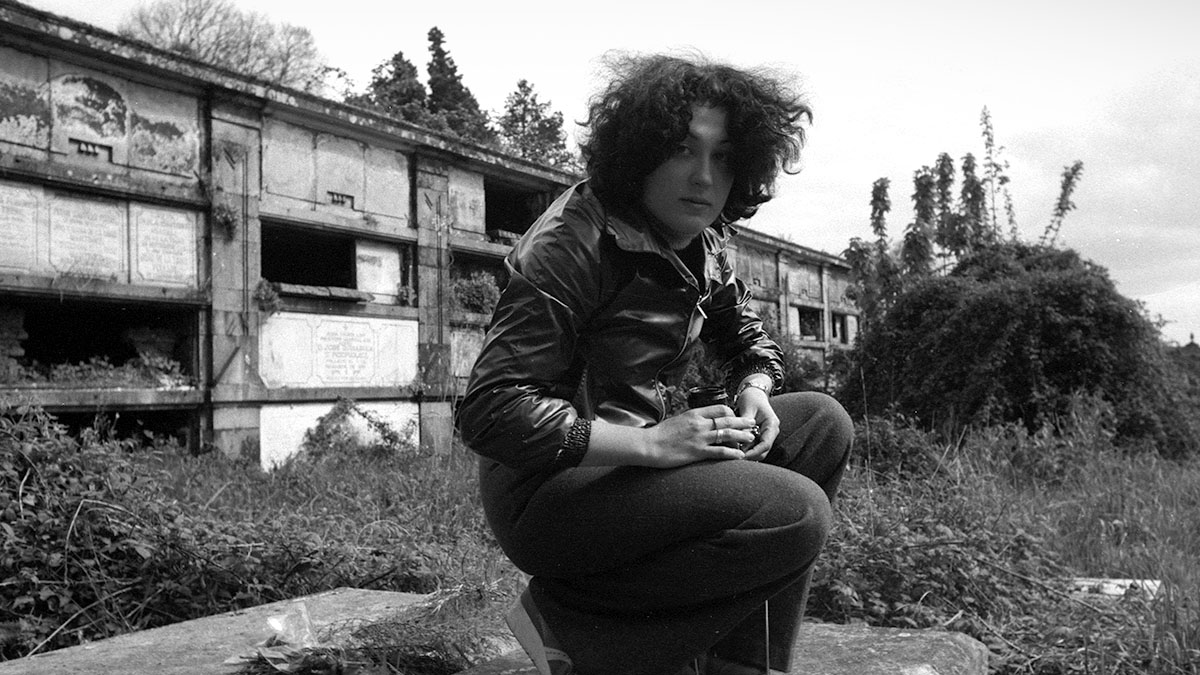
Bonaval Cemetery, Santiago de Compostela.
The major turning point in her career came with Galicia and the Transition. In 1975 she travelled there at the invitation of the Colexio de Arquitectos de Galicia and shortly afterwards settled in Santiago de Compostela. From there, she worked as a documentary photojournalist and built, between 1975 and 1979, an extensive archive of negatives documenting strikes, demonstrations, protests against the Atlantic Motorway, neighbourhood movements, and everyday life in rural Galicia. In many of these images, women appear at the forefront, and their role within social movements became one of the most recognisable threads running through her work.
This body of photographs has recently been revisited through the project “Anna Turbau. Galicia, 1975–1979. A intimidade da imaxe”, which resulted in both a publication and a travelling exhibition that has toured various venues throughout Galicia. Thanks to this renewed reading of her work, she is now recognised as one of the key voices in documentary photography of the Spanish Transition.
1990–2020
WOMEN & RURAL WORLD
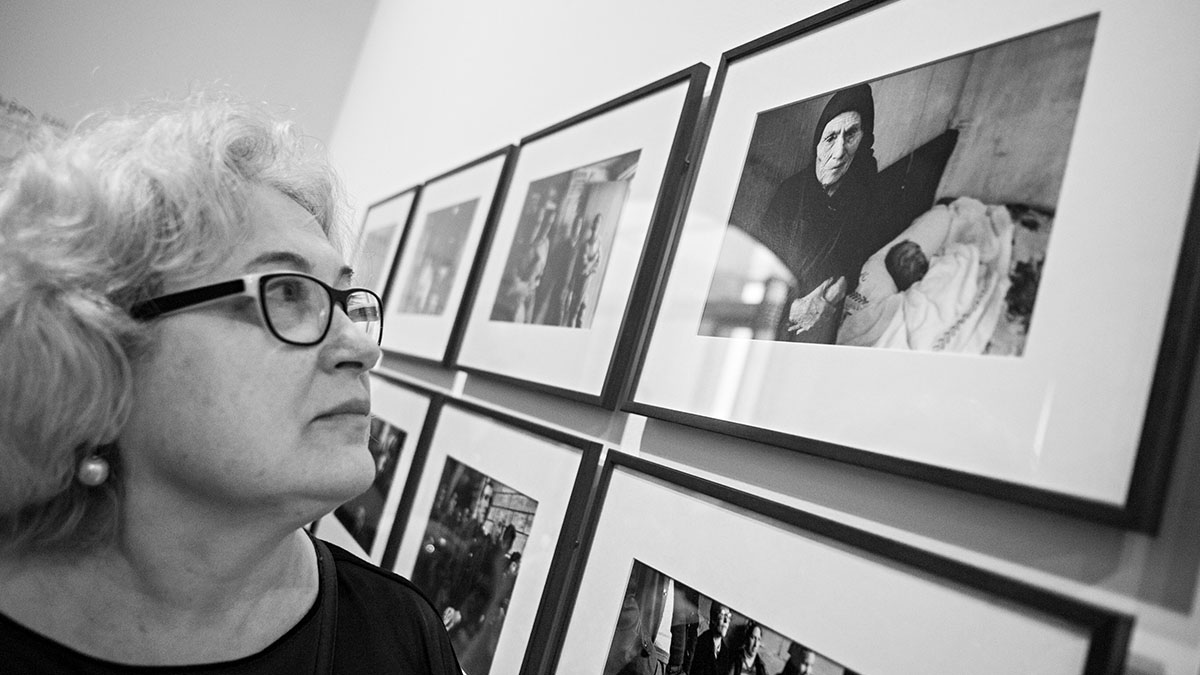
PhotoEspaña Opening. 2014 © Roser Vilallonga
From the 1990s onwards, Anna continued working within a documentary framework, while developing more personal projects centred on territory, memory, and women’s experiences, in series such as “Santiago, pequena historia natural”, “Paisajes de Soria”, and “Mujer y silencio”.
Her work has been included in exhibitions revisiting the history of photojournalism in Spain, including “Cuatro Direcciones. Fotografía contemporánea española 1970–1990”, “Tan lejos, tan cerca. Documentalismo fotográfico en los años 70” (PhotoEspaña 2014), “Poéticas de la democracia”, and “La historia revelada. Fotoperiodismo y transición española (1975–1982)”.
2020–TODAY
PHOTOGRAPHIC HERITAGE
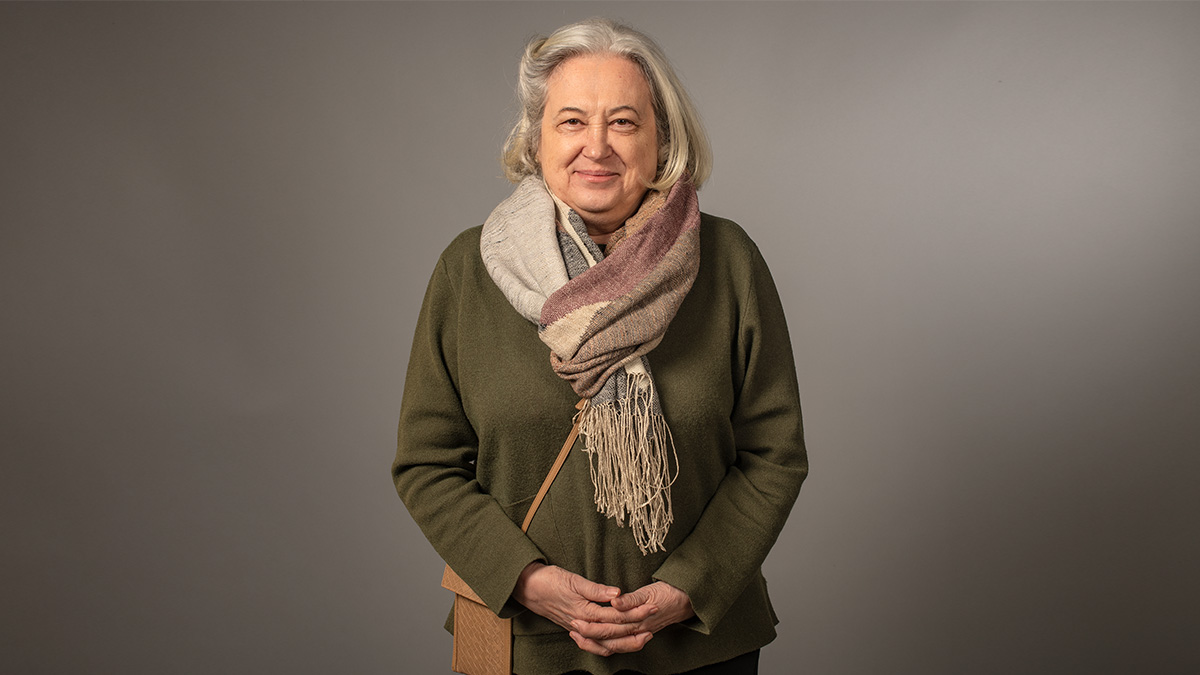
Presentation of the Spain National Photography Centre. 2022 © Sofía Moro
In 2023, her archive began to be represented by the Photographic Social Vision foundation. That same year, she received the TRANSHUMANT 2023 Award for Audiovisual Career Achievement.
In recent years, her work has also entered the international art circuit, with participation in fairs such as ARCOmadrid 2025, ARCOmadrid 2026, and Paris Photo 2025 through Galería Nordés. At the Paris fair, she was also selected for the Elles x Paris Photo programme.
Her photographs are held in collections including the Museo Nacional Centro de Arte Reina Sofía, the National Photography Collection of Catalonia, the Centro Galego de Artes da Imaxe, the Centro Galego de Arte Contemporánea, and the Círculo de Bellas Artes in Madrid. A significant part of her work is also preserved in the archive of the Consello da Cultura Galega.
In March 2025, Anna Turbau passed away unexpectedly. Today, her legacy is managed by her only son, Dani Soler and represented by Photographic Social Vision foundation. This archive is understood as a key resource for revisiting Spain’s democratic Transition through documentary photography: through the streets, villages, women, and social movements that shaped this historic transformation.
See more collections at Photographic Social Vision